
Road to a Chef – Roasted Chestnut [1000/3]

Can you make a dish without paying for anything?
And I don’t mean starting a fire by rubbing sticks together to cook your dinner – though it sounds like a fun experiment – but rather to get the ingredients from Mother Nature.
Sneaking onto a farmland to steal apples and pears is cheating, but going to the forest and plucking certain shrooms, leaves, nuts or even berries to fill your belly without paying a penny is simply fascinating.
Enter: The challenge of today.
I remember asking my roommate whether we could roast the chestnuts I’ve found on the ground when we were walking in the city.
“Those are not the ones, they’re not edible if they come in a shell like this”
Honestly, I had no clue what the difference is, but my enthusiasm died instantly – until I stumbled upon them again, but this time in the woods during my Tarzan hike where I intended to climb trees.
This time I googled it.
The edible ones have a spiky shell – they’re thin, sharp and there is a lot of them.
The non-edible version is just a soft green ball, bulky but undefended. Just like Shrek.
“BINGO!” I said, and I curiously started gathering them in my hands.
When the number of holes on my fingertips started to go over a 100, I changed strategy and began using a stick to open up the shells – without having to hurt myself – which allowed me to pick the ones that are freshly fallen and have not yet cracked. Each shell had exactly 3 nuts in it. No more, no less. Their size, on the other hand, was completely different. Most of the time there was only 1 that was thick, shiny-brown and unharmed by insects. The rest were either flat, deformed or already half-eaten.
It took about an hour to fill up my bag; the feeling of increasing weight on my shoulders made me very excited.
“This is going to be such a good story” I said to myself, as I stuffed it with as many nuts as I can.
The people who hiked past stopped and asked multiple times:
“What are you doing/What’s that?”
It’s kastanje.
I’ve learned the word in Dutch, which is very close to the Hungarian word “Gesztenye”, yet none of them even resembles “chestnut” in English.
When I finished, my bag was bulging with nuts like a pouch full of gold in the Medieval ages.
To relax and celebrate the first success (collecting enough ingredients), I went full Tarzan and climbed up everywhere.


After my Inner Monkey has had its fill of happiness, I went home and googled how to prepare these nutritious snacks.
I thought it’s easy to do them. Just a little peeling here, a touch of roasting there, and boom – ready to serve.
Nut even close. There is a ~4-hour long process until you finish them, though most of the steps are passive, so you don’t have to stand there.
The rules are simple:
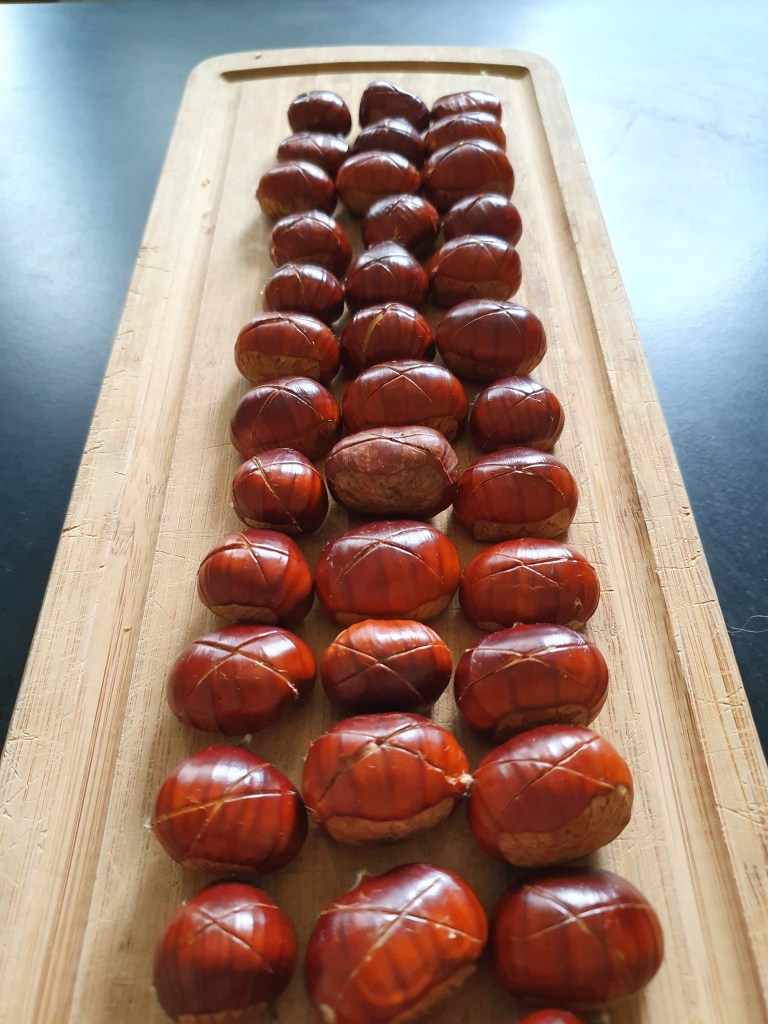
– Their shell has to be cut open (in half, or in the shape of an X), so they can expand without exploding and ruining your oven.
– Then, you must soak them in water for several hours, so they become softer and easier to consume when they’re finished [+ the worms, if there are any, float to the surface]
– Last but not least you put them in the oven with a touch of water under them, so when it evaporates, it creates enough humidity for the nuts to roast evenly without drying out/burning too quickly.
Now that we’ve had all the theory, let’s begin:
Step 1) Quality control
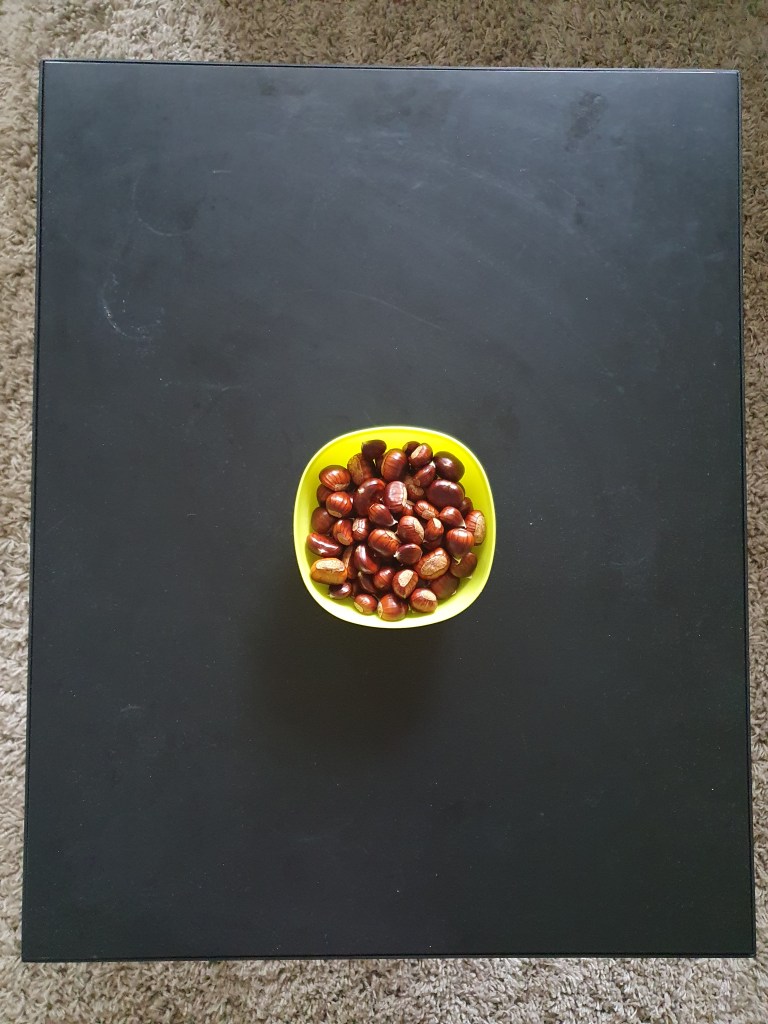
Checking each one from the bottom to the top, looking for (worm)holes, and squeezing the sides to see if there are any soft spots. There were only a few bad ones; still around 0,5kg left for the good part, which will end up as ~0,25kg after the peeling is done.
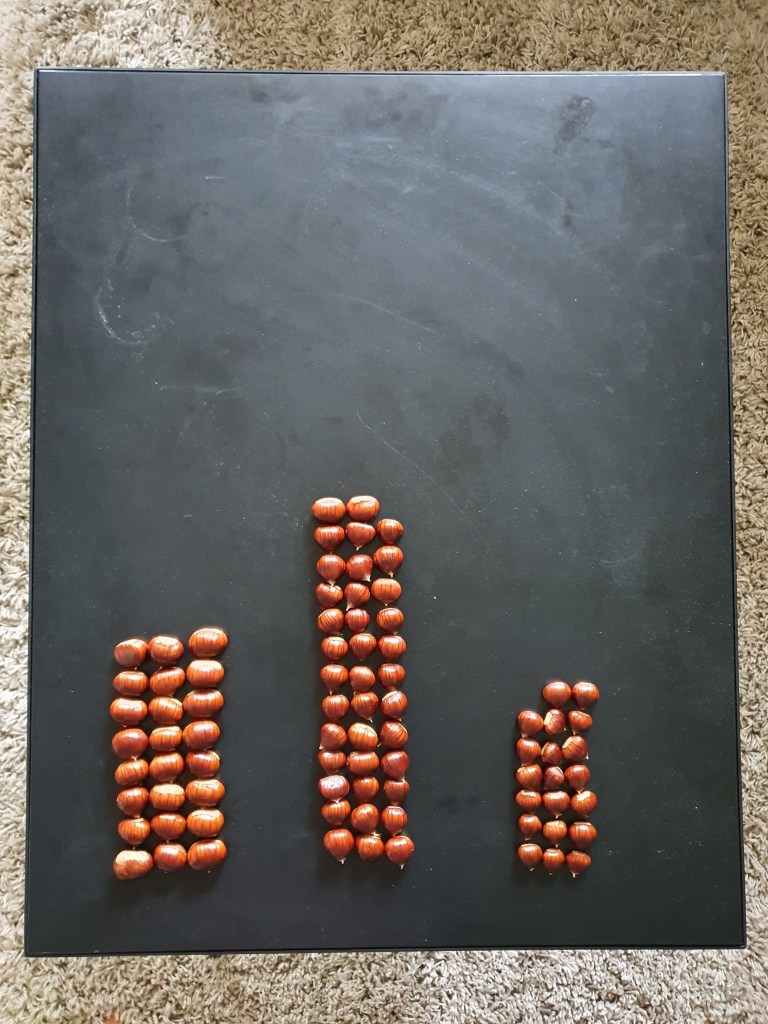
Step 1.1) Organize them into groups
Small, medium and big chestnuts, so I wouldn’t have to waste time on the small ones when I can just start with the big ones and go downwards.
Step 2) Open up the shell
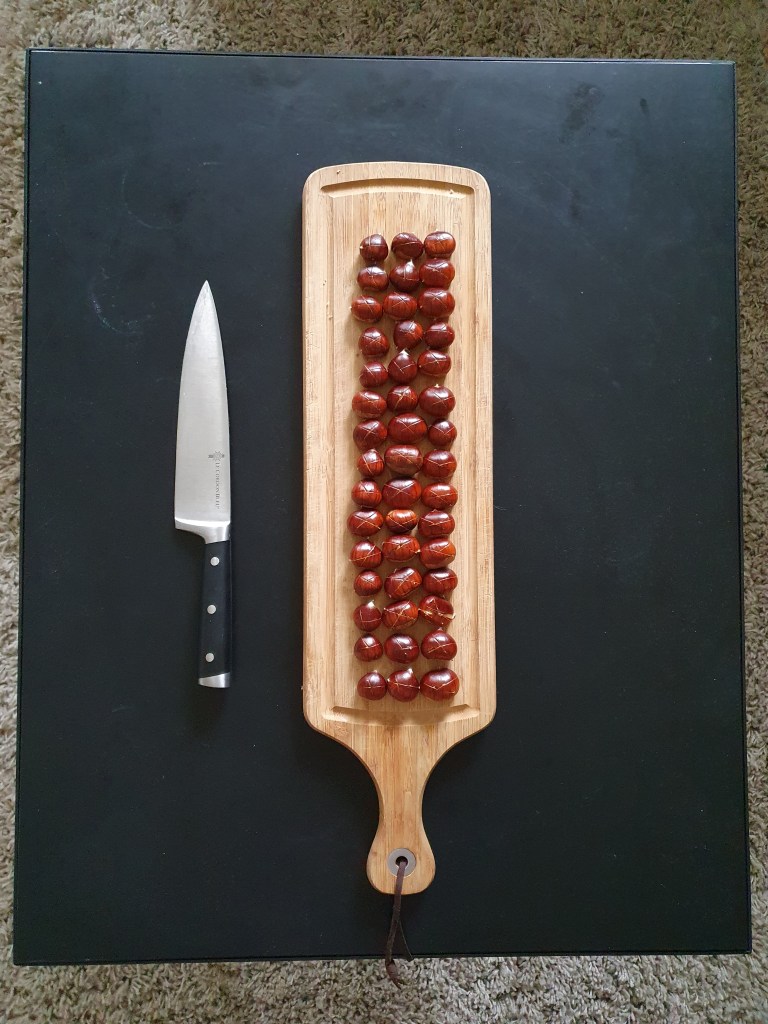
This one is perhaps the hardest step. If you cut too deep and split the meat open, the peeling will be a hell of a disaster – the nut will come out in pieces, and you don’t want that.
Or, cut too shallow and you won’t have enough space to extract them.
It’s a very delicate process, which meant I had to try my best to do it well.
The result looked like this:
Step 3) Soaking
2 hours, at least.
*Bluggy bluggy bluggy bluggy bluggy*
I pushed them all in a bowl of water and watched them sink.
No worms came out floating, the quality control was executed flawlessly.
Step 3.1) Pat them dry with a towel or dish cloth
Drain the water and rub the rest of it off.
Step 4) Roasting
Put them on a baking sheet with the cuts facing the ceiling [mind the space] and place them in a pre-heated oven for 30-45 minutes [depending on size & quality] on 210°C / 410°F.

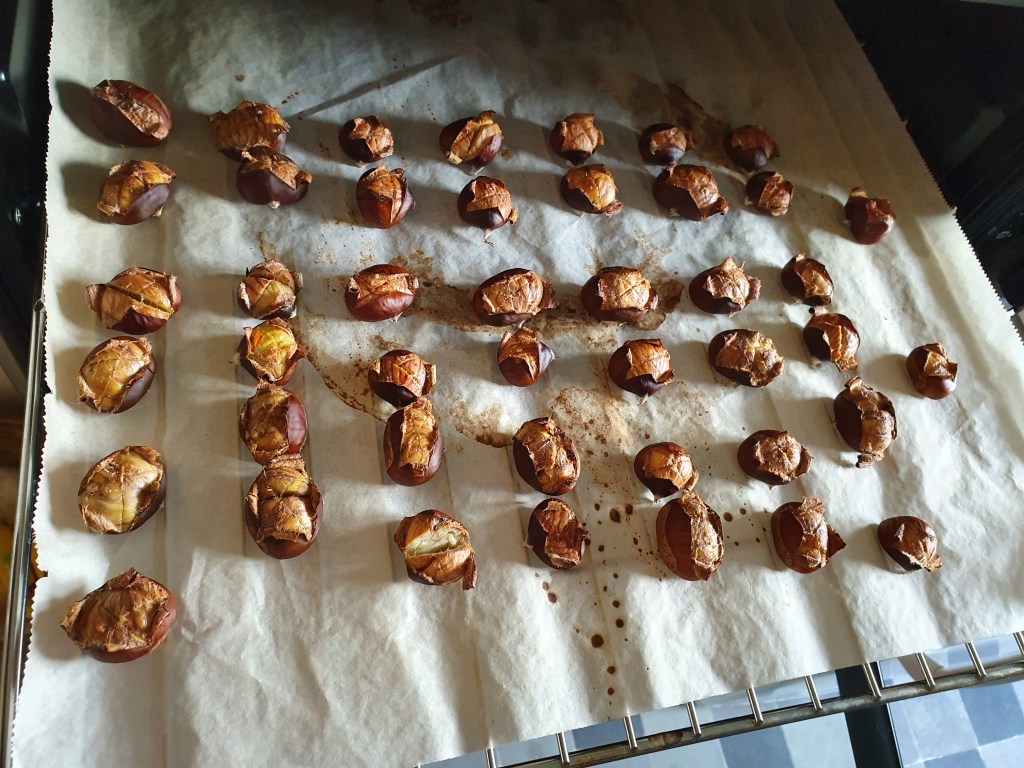
Tip: Put another baking sheet under the nuts with some water in it, that’ll take care of the extra humidity they need while they’re baking
Around halfway, I remember watching the slices of the shells curl up and break around the X with a broad smile on my face.
“It’s working, it’s working!” I said on a high-pitch, as the smoking oven filled the kitchen with wet mist. The trick to give them a little more steam worked wonderfully, they remained tender and neat. Not a single one ended up dry or burned, though that’s when the most important question came to annoy me:
How do I know if it’s done if I’ve never eaten it?
What is the sign of them being roasted properly?
Both the taste and the texture were unfamiliar to me, so I couldn’t rely on my memory.
In this case, I always go for the golden mean in the recipe.
Roast for 30 to 45 minutes? 37.5 is the number I’m going with.
After I took out the golden brown beauties, a quick cool-down session followed for 15 minutes.
There was only one step separating me from enjoying the fruit of my labor today:
Step 5) Peeling
If I was managing a section in Hell, I’d make the damned souls peel chestnuts for all eternity – I’m pretty sure I’d get a promotion in a week.
After 30 minutes of cutting the skin under my nails, hamstering out the stuck pieces with my front teeth, and proudly filling a bowl with more and more nutmeat, the results were astonishing:
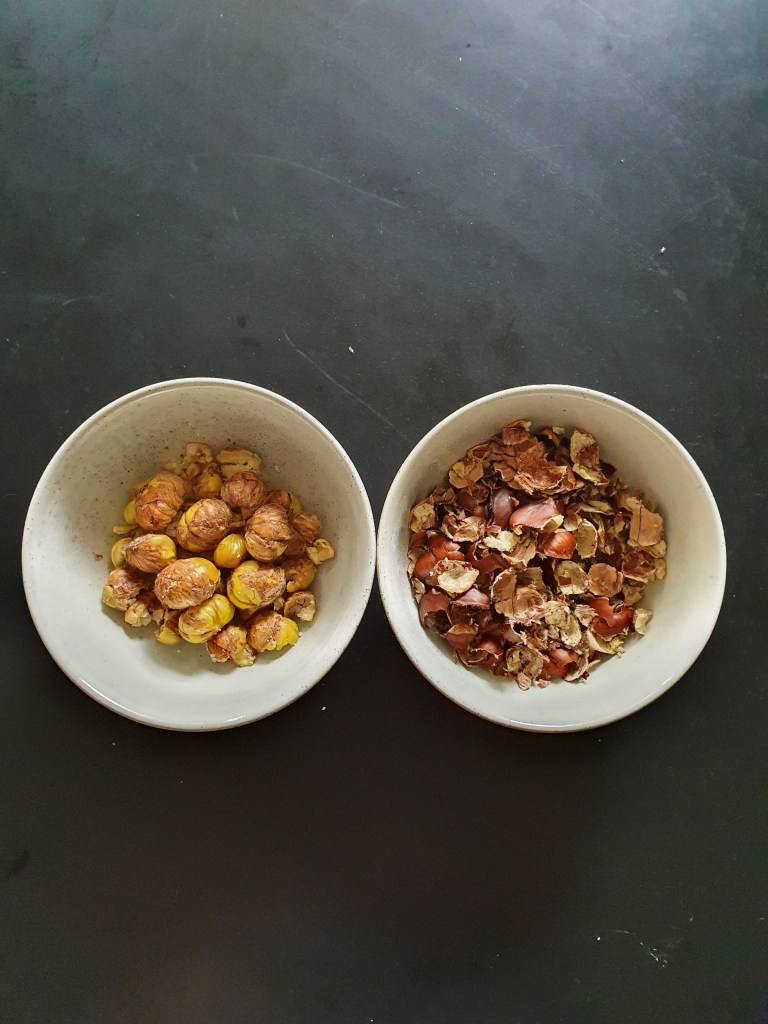
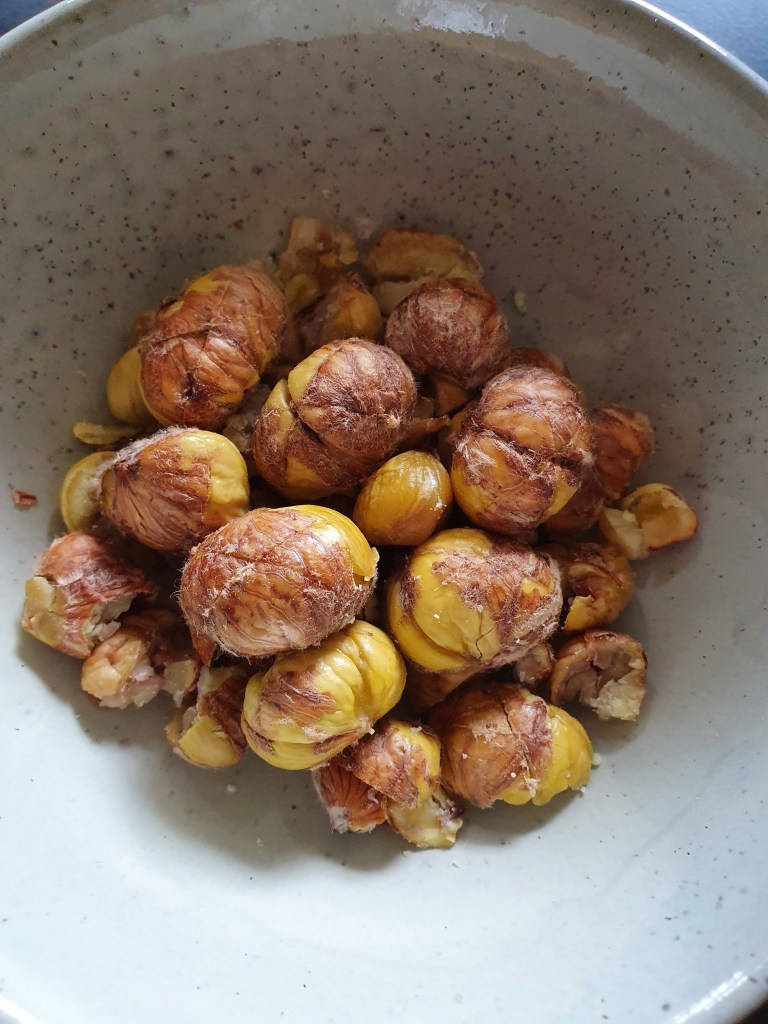
It was warm, tender and sweet. All this for free, 100% nature made.
Satisfaction: 10/10.
If you’re planning to try it, I’d suggest you do it quickly, because the season is over when November creeps in.
If not, you can try again next year. Trust me, it’s worth it. Every minute from start to finish.
Take care and bake well,
Erik
2020.10.18. – Day 636
Bucket List Progress:
– Become a Chef: Make 1000 dishes (#52) – [1000/3]
 Road to a New Life